The Story Behind Coppermine
There's a memory I return to when I need to remember who I am.
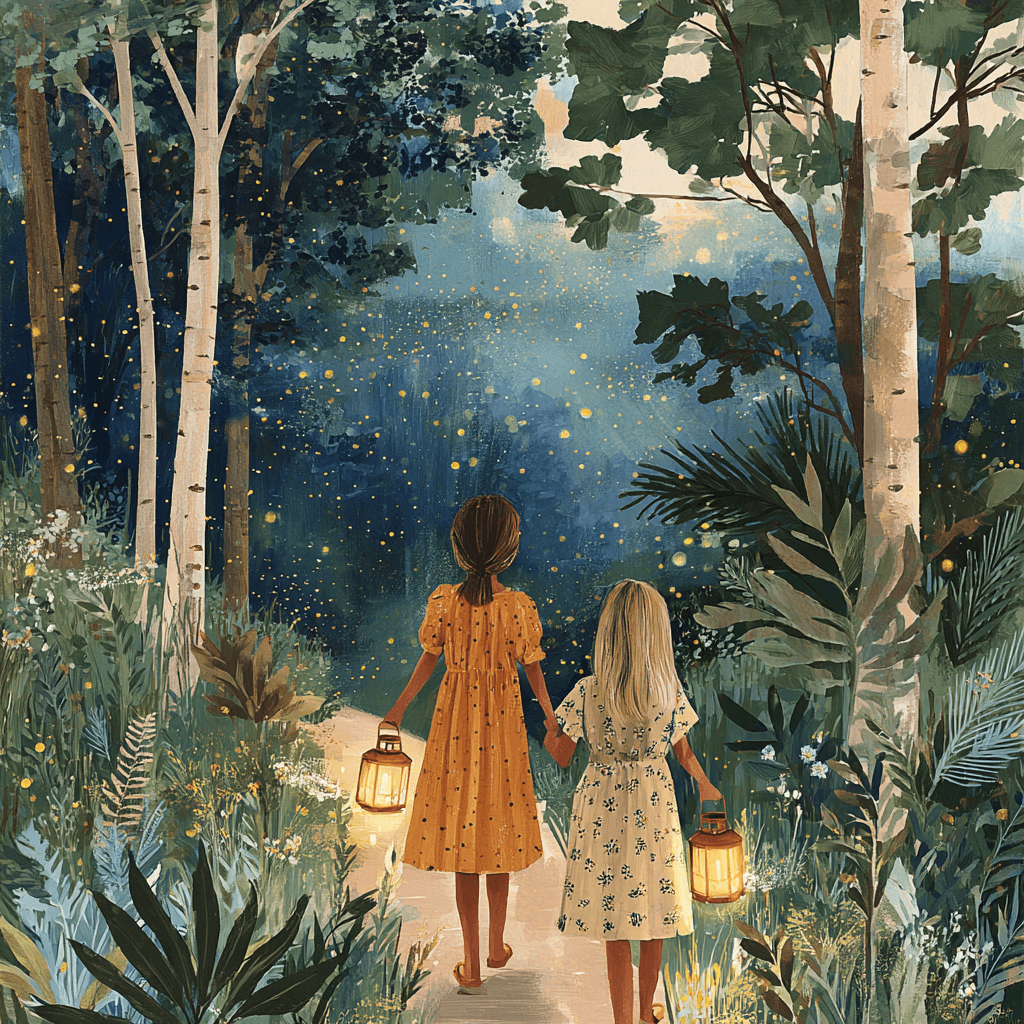
I'm ten years old, standing in the woods behind my house with my best friend and next door neighbor Sary, holding a hammer I borrowed from my dad's workshop. We're building a fort between three trees, made of two-by-fours and nails we scavenged from the construction site where my family was building our new house. We work for hours, barely talking, just building. When we finally sit on the bench we've made, our backs against the rough bark, we feel proud of ourselves, two girls with real tools, building something no one gave us permission to build. We hear the screen door open. We aren't ready to go back.
The neighborhood where I grew up was called Coppermine Village. It wasn't fancy. Just a cluster of houses nestled in the woods in Connecticut, built in the early 1980s when everyone moved in at once. But to me, it was everything. The neighbors weren't just neighbors. They were aunts and uncles and cousins, gathering for cookouts in the summer and luminaries in the snow on New Year's Eve. The woods weren't just trees. They were our universe: every fallen log a landmark, every clearing a destination, every risk a carefully calculated adventure.
Sary and I spent entire summers in those woods building and exploring. My sister Katie was always nearby, with a gift for making the ordinary magical. She'd write plays and hold auditions. (You had to earn your part.) She'd construct elaborate mysteries around the old shack up in the woods. And she could look at a grass-covered rise circled by a stream and cattails, shaped exactly like a turtle's back if you knew how to see it, and say: this is Turtleback Island. And then it was.
We knew that neighborhood like the back of our hands. We'd swing so high on the swingset that our feet could touch the bright green leaves of the trees. We'd rollerblade down Village View hill at terrifying speeds. Within the safety of our fort, we'd design blueprints for our dream houses in matching spiral notebooks and make plans for the future.
And then, just before I turned eleven, we moved.
I remember the day we left. I stood in the driveway and looked back at the woods, at Sary's house next door, at the whole village that was my world. I felt something crack open inside my chest. I didn't have the words for it then, but I do now.
I felt like I was losing my village. And I spent the next two decades trying to find it again.
I did what I was supposed to. College, PhD, career. Each thing led to the next and I kept climbing.
I also got incredibly lucky. I married my college sweetheart and had three kids who light up my world. Those weren't the problem. Those were the point.
But I was white-knuckling the rest of it. Constantly behind, constantly chasing approval, convinced the next achievement would be the one that finally made me feel like enough.
I remember sitting in an airport one evening, somewhere between a leadership offsite and my daughter's music concert I was already going to be late for. Sitting in one of those black chairs, I realized I couldn't remember the last time I'd done something that wasn't because I was supposed to. Every decision had become a calculation. Every weekend had become logistics.
I'd built a lovely life. I'd forgotten how to build something nobody asked me to build. I didn't know how to say that out loud, let alone what to do about it. Turns out I wasn't the only one feeling that way.
I couldn't go back to Coppermine Village. But I could build something new.
I've spent my career studying people at work: what helps them thrive, what wears them down, what makes a life meaningful and not just successful. You might think that knowledge would keep my own life in good order. It didn't, entirely.
Eventually I had to question the shape of my own successful career. I stepped away from one form of leadership and kept leading in the ways that mattered most to me: coaching, mentoring, building community, making things. I'm still living the questions. I know this terrain from the inside, which is a different thing from having it figured out.
The people I work with have done everything right too. Good careers, full lives, so much to be proud of. Some are stepping into bigger roles. Some are wondering whether to step back. Some are quietly redrawing how work fits alongside children, aging parents, health, money, and the person they're becoming.
They're ready to stop striving for perfection and start contributing from the fullest version of who they actually are. To discover that who they are, not who they're trying to be, is exactly what the world needs from them.
Coppermine is where that work lives now. Some of it is one-on-one coaching. Some of it is writing: essays that help people see their lives from a different angle. Some of it is reflection tools you can use on your own, at your own pace. And some of it is the Friday Coffee Circle, a small table where women can stop pretending they have it all figured out, and find out they were never alone in the struggle.
The biggest shifts don't happen when someone hands you the right answer. They happen when you finally learn to trust the voice that isn't driven by fear or approval.
I'm still finding my way back to that village. Still learning that belonging isn't something you earn. It's something you remember when you finally get quiet enough to hear yourself.
If you're reading this and something in you recognizes that feeling — the sense that you've lost a piece of yourself somewhere along the way, or that you're standing at the edge of something new and aren't sure how to begin — then maybe there's room for you here too.
Coppermine Studio is my attempt to build that for others. A place to gather. A place to think. A place to build something meaningful together. A place where you don't have to perform to belong.
The door is open. There's room in the fort. Come on in.
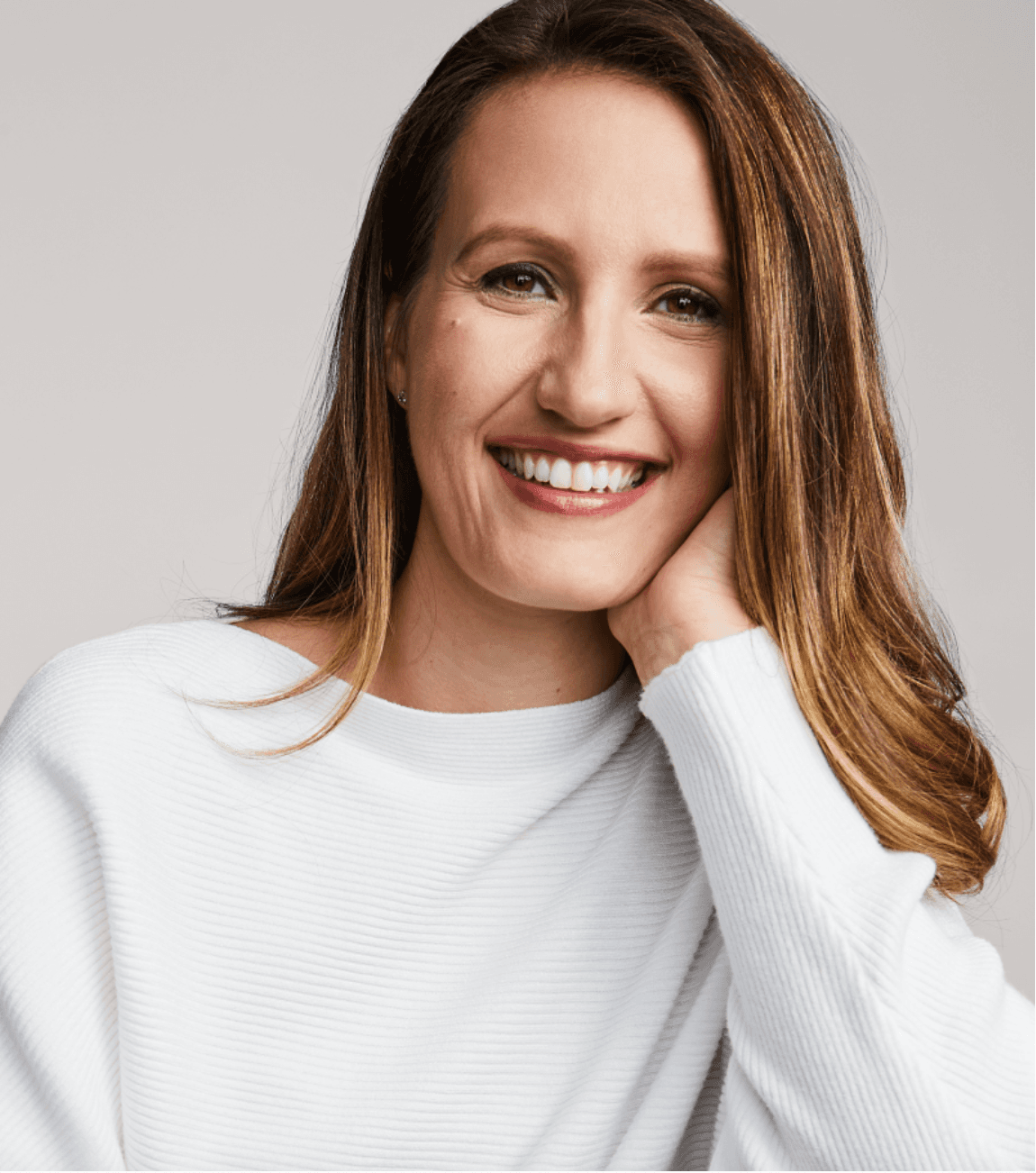
Allison Yost, PhD
Allison Yost, PhD is an organizational psychologist, coach, and executive, and the founder of Coppermine Studio: coaching, reflection, community, and writing for people rethinking how work fits into the life they want.
Explore coaching with Allison →
She lives in Arlington, Virginia with her husband Kevin, their three children, and two dogs. Outside of work and family life, Allison enjoys reading, writing, sketching, painting, and building creative projects with her kids — including experimenting with new tools and technologies to make games and apps together.
Some of those experiments live at CoppermineKids.com, a small creative studio run by her kids.
Looking for executive coaching? Visit Allison Yost, PhD.